Nietchua
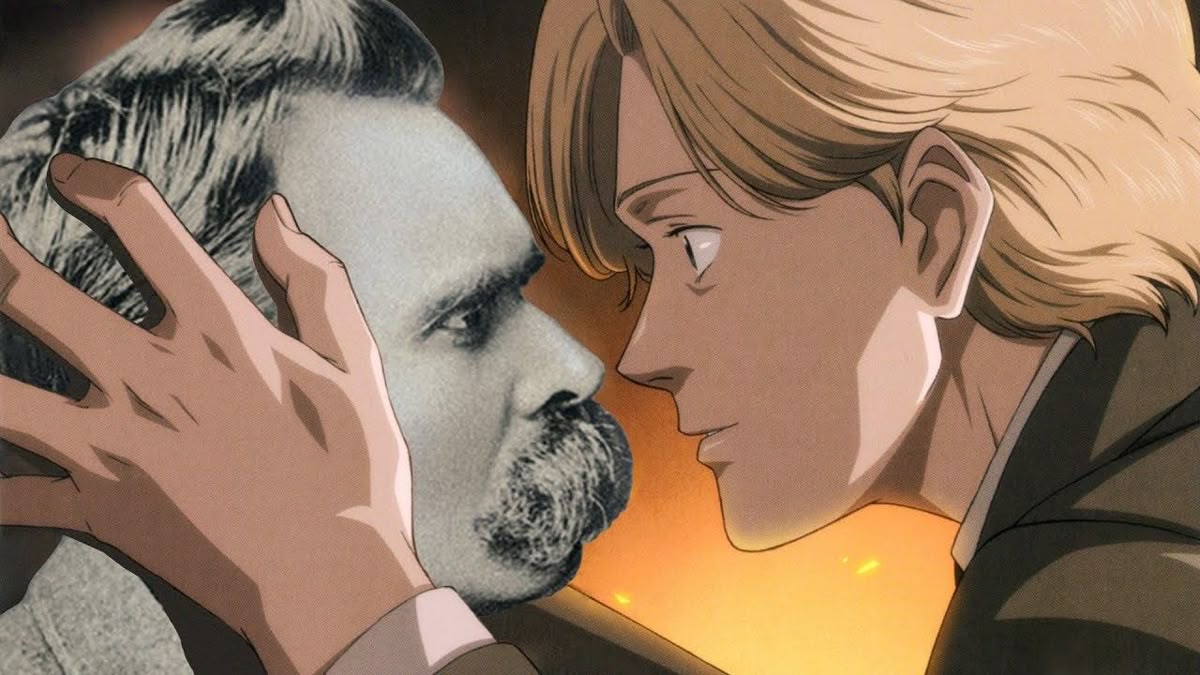
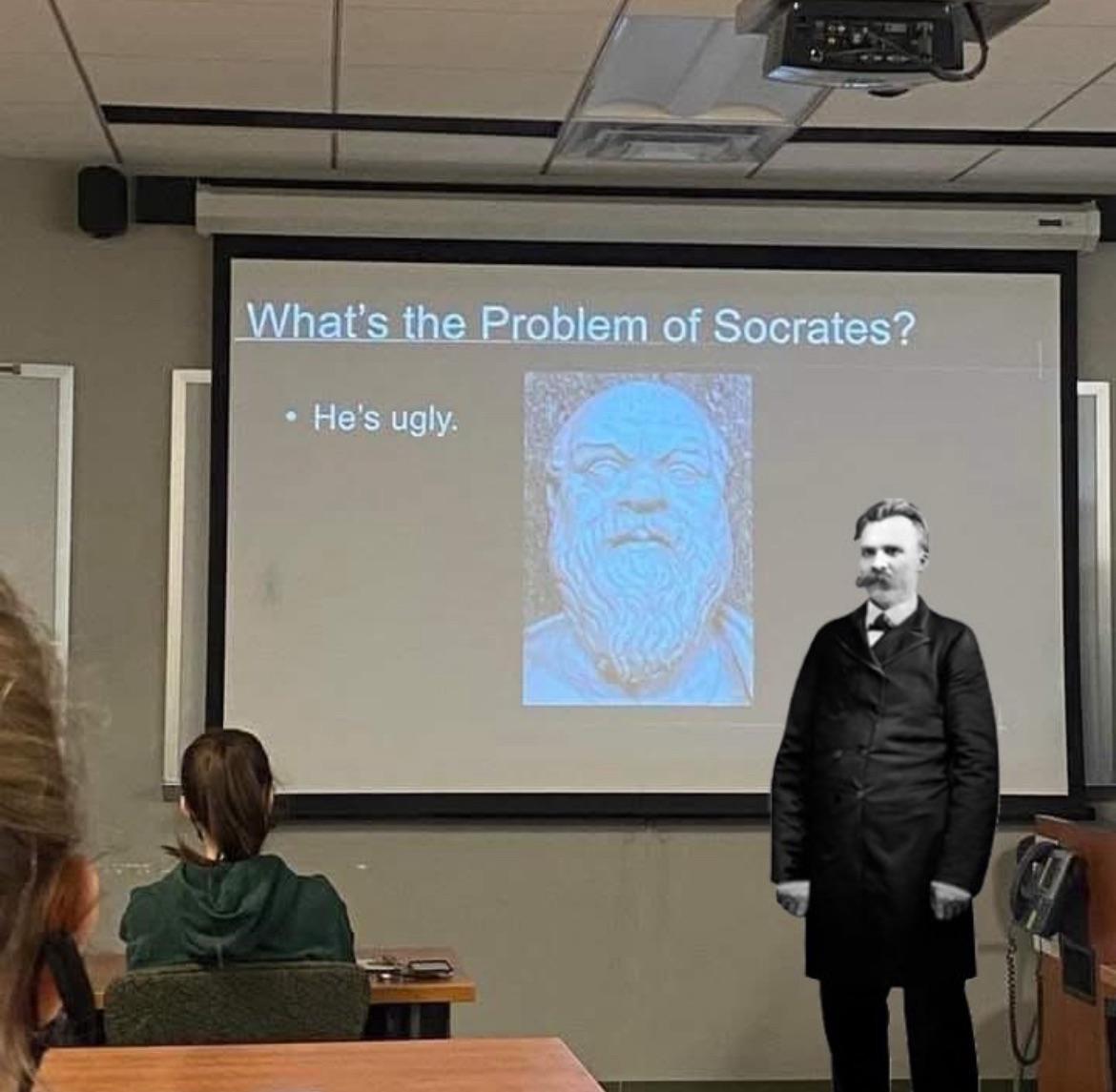
Enter the abyss where Nietchua philosophy meets meme culture. Transfigure yourself. Embrace the eternal recurrence.
Become the Überdog.
NietozfiYFzcGYAu3V5A8sgsPpCgBeaR5PRqA9w1fY9
The Transfigurator
Upload any image. Preview your Nietzschean transfiguration for free. Unlock & download the full masterpiece for 0.01 SOL — all proceeds go directly to $Nietchua token buybacks.
Drag & drop your image here
or click to browse
Upload an image to begin
Today's Relevance
Through Meme Culture
In the digital age, Nietzsche has become something unexpected: a meme. Not the shallow kind that dies in a week, but the kind that mutates, spreads, and infects the cultural consciousness with ideas too dangerous for polite society.
“The individual has always had to struggle to keep from being overwhelmed by the tribe.”
— Friedrich Nietzsche
Walk through Crypto Twitter in 2025 and you'll find Nietzsche everywhere. Not his name — his spirit. The degen who rugs a project and walks away without apology? That's the “master morality” in action, valuing strength and consequence over guilt and repentance. The anon who builds in silence for years, rejecting VC money and influencer hype? That's the path of the Übermensch — self-overcoming without the crowd's approval.
The “based” culture that celebrates saying the unsayable, the “redpill” narrative of seeing through societal lies, the rejection of “mid” conformity — all of this is Nietzsche filtered through internet irony. His ideas have been meme-ified, stripped of academic pretension, and weaponized by a generation that communicates in 280-character aphorisms.
But here's the psyop: Nietzsche himself would have laughed at the memes. He would have recognized in them the same Dionysian energy he celebrated in The Birth of Tragedy — chaos, creativity, the destruction of old forms to birth new ones. The memecoin itself is a Nietzschean act: creating value from nothing, willing it into existence through collective belief, then watching it dissolve or ascend — amor fati in financial form.
The Herd vs. The Degen
Nietzsche's “herd morality” is the normie who buys index funds and calls the SEC when a token pumps 1000x. The degen is the Übermensch-in-training: creating his own values, risking everything, embracing the eternal recurrence of rugs and moonshots.
God is Dead, Long Live the Blockchain
If God is dead, then centralized institutions are his rotting corpse. The blockchain is the new value-creating mechanism — not divine, not state-sanctioned, but willed into existence by those with the courage to code, deploy, and hold.
Influence
On World Views & Literature
Existentialism
Sartre, Camus, Heidegger
Nietzsche is the unacknowledged father of existentialism. His proclamation that we must create our own meaning in a godless universe became the central tenet of the entire movement. Sartre's 'existence precedes essence' is a direct descendant of Nietzsche's value-creating individual.
Psychology
Freud, Jung, Adler
Freud admitted Nietzsche's insights into the unconscious were unparalleled. Jung built his concept of the Shadow directly from Nietzsche's exploration of the Dionysian. Adler's 'will to power' is practically plagiarized. Modern therapy owes more to Nietzsche than to any clinician.
Literature
Kafka, Hesse, Dostoevsky
Kafka's absurd bureaucratic nightmares echo Nietzsche's critique of herd morality. Hesse's Steppenwolf IS the Übermensch in crisis. Even Dostoevsky, writing before Nietzsche's mature works, anticipated the abyss that Nietzsche would name and map.
Post-Structuralism
Foucault, Derrida, Deleuze
Foucault's power-knowledge is pure Nietzsche. Derrida's deconstruction is Nietzschean perspectivism with a French accent. Deleuze wrote entire books expanding on Nietzsche's concepts. The entire continental philosophy tradition of the late 20th century is a footnote to Nietzsche.
Modern Politics
Left & Right
Paradoxically, Nietzsche has been claimed by everyone and no one. The alt-right misreads him as a proto-fascist; the left ignores his critique of egalitarianism. Both are wrong. Nietzsche is beyond politics — he is the diagnosis of politics itself as a symptom of decadence.
Works
Studies
1872
The Birth of Tragedy
Apollonian vs Dionysian
“Existence and the world seem justified only as an aesthetic phenomenon.”
1883
Thus Spoke Zarathustra
Übermensch, Eternal Recurrence, Will to Power
“I teach you the Übermensch. Man is something that shall be overcome.”
1886
Beyond Good and Evil
Master-Slave Morality, Perspectivism
“Beyond the sphere of opportunistic lies and well-meaning deceptions, truth is a woman who never yields.”
1887
On the Genealogy of Morals
Ressentiment, Bad Conscience
“The slave revolt in morality begins when ressentiment itself becomes creative and gives birth to values.”
1888
Ecce Homo
Self-mythology, Amor Fati
“My formula for greatness in a human being is amor fati: that one wants nothing to be different.”
Philosophy
The core concepts that shattered Western thought
The Übermensch (Overman/Superman) represents humanity's next evolutionary step — a being who creates his own values, embraces life fully, and transcends the herd morality of the masses. Not a biological superhuman, but a spiritual and cultural ideal. The Übermensch says 'Yes' to life in all its terror and beauty, affirming existence without the crutch of divine judgment or afterlife promises. He is the lightning, the madness, the dancing star born from chaos.
What if this life, with all its pain and joy, must be lived again and again for eternity — every detail, every suffering, every ecstasy, unchanged? The Eternal Recurrence is Nietzsche's supreme test: can you embrace your life so completely that you would will it to repeat forever? It is the ultimate expression of amor fati — love of fate. Those who recoil from this thought are still slaves to resentment; those who rejoice are the true affirmers.
Nietzsche identifies the Will to Power as the primary motivational force behind all human behavior — more fundamental than Schopenhauer's Will to Live or Freud's pleasure principle. It is the drive to grow, expand, overcome resistance, and assert one's strength. Not merely domination over others, but self-overcoming: the striving to become more than one presently is. All life, from the simplest organism to the greatest artist, expresses this will.
In On the Genealogy of Morals, Nietzsche traces how morality itself was inverted. The ancient 'master morality' valued strength, nobility, courage, and beauty — the virtues of the aristocratic warrior class. But the weak, unable to achieve these virtues, invented 'slave morality' which redefines good as weakness, humility, patience, and pity. Christianity and modern egalitarianism are the triumph of this resentful inversion. Nietzsche demands a revaluation of all values — a return to life-affirming aristocracy of spirit.
'God is dead' is not a triumphant atheist slogan but a terrifying diagnosis. Nietzsche announces that Western civilization has murdered its own highest values through rationalism, science, and secularism. But the deed is so great, the implications so vast, that we have not yet comprehended what we have done. The collapse of metaphysical foundations leaves humanity adrift in nihilism — unless we can create new values, new myths, new gods worthy of a post-religious age.
Amor Fati — love of fate — is Nietzsche's formula for the highest possible affirmation of life. It means not merely accepting what happens, but actively willing it, desiring that every moment of one's life, including the most terrible suffering, remain exactly as it was. Not 'I can bear it' but 'I would not have it otherwise.' This is the psychological core of the Übermensch: the transformation of every 'it was' into a triumphant 'thus I willed it.'
The Aphorisms
“What does not kill me makes me stronger.”
— Friedrich Nietzsche
Biography
1844 — 1900. The life of a solitary mountain.
Birth in Röcken
Friedrich Wilhelm Nietzsche is born on October 15 in the small Prussian village of Röcken, the son of a Lutheran pastor. His name honors the King of Prussia, Friedrich Wilhelm IV.
Death of Father
His father dies of a brain ailment. Young Nietzsche witnesses the slow, painful decline — an early confrontation with suffering and mortality that shapes his entire philosophy.
Schulpforta
Admitted to the prestigious boarding school Schulpforta on a scholarship. Here he discovers a passion for literature, music, and classical philology.
University of Bonn
Begins studying theology and classical philology at the University of Bonn, later transferring to Leipzig where he falls under the influence of Arthur Schopenhauer's philosophy.
Meeting Wagner
Meets Richard Wagner in Leipzig. The composer becomes a father figure, mentor, and intellectual obsession for the young philologist.
Professor at Basel
At age 24, appointed Professor of Classical Philology at the University of Basel — the youngest ever to hold the chair. He resigns his Prussian citizenship, becoming stateless.
The Birth of Tragedy
Publishes his first book, a radical reimagining of Greek culture through the lens of Dionysian chaos versus Apollonian order. The academic world is scandalized.
Bayreuth Break
Attends the inaugural Bayreuth Festival and is quietly disillusioned. The Wagner cult repels him. The friendship cools, then ruptures entirely.
Resignation & Illness
Resigns from Basel due to chronic ill health — migraines, nausea, failing eyesight. He will spend the next decade wandering Europe, writing in solitude.
The Eternal Recurrence
While hiking near Lake Silvaplana in the Swiss Alps, the idea of Eternal Recurrence descends upon him like a thunderbolt. '6,000 feet beyond man and time.'
Lou Salomé
Meets Lou Andreas-Salomé, the brilliant Russian-Jewish intellectual. He proposes marriage twice; she refuses both times. The rejection devastates him.
Zarathustra Begins
Thus Spoke Zarathustra is published in parts. Written in bursts of ecstatic inspiration in Rapallo, Italy. 'A book for all and none.'
Turin & Madness
In Turin, Nietzsche witnesses a cabman whipping his horse. He throws his arms around the horse's neck, weeping. He never recovers his sanity.
Death in Weimar
After eleven years of mental silence, cared for by his sister Elisabeth, Friedrich Nietzsche dies on August 25. His final words, allegedly: 'Mother, I am dumb.'